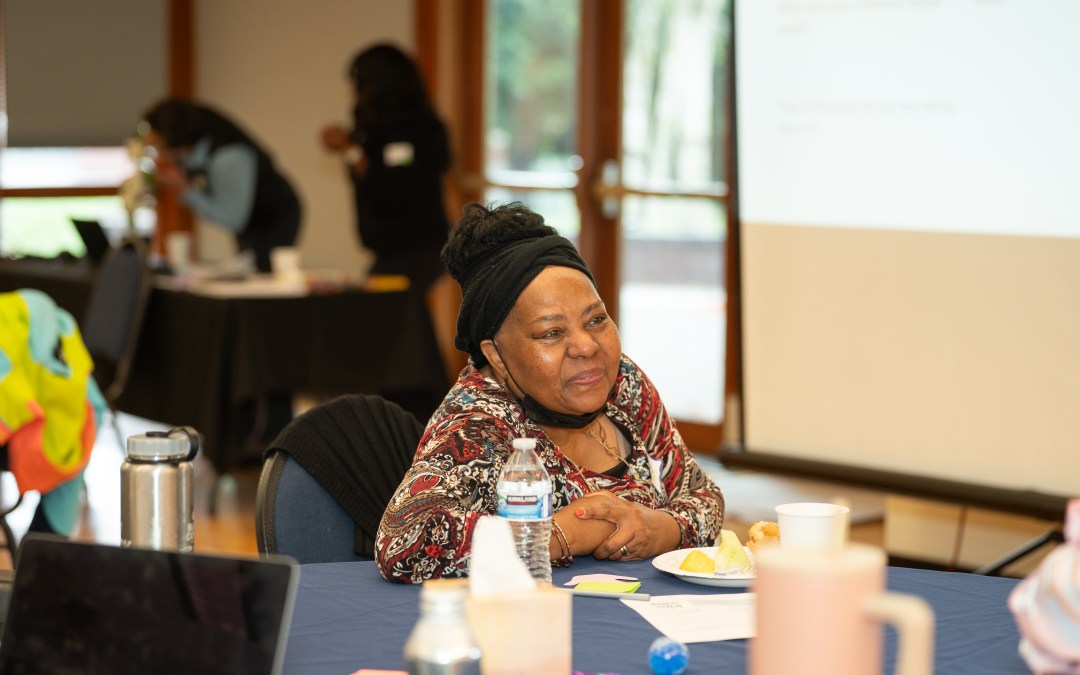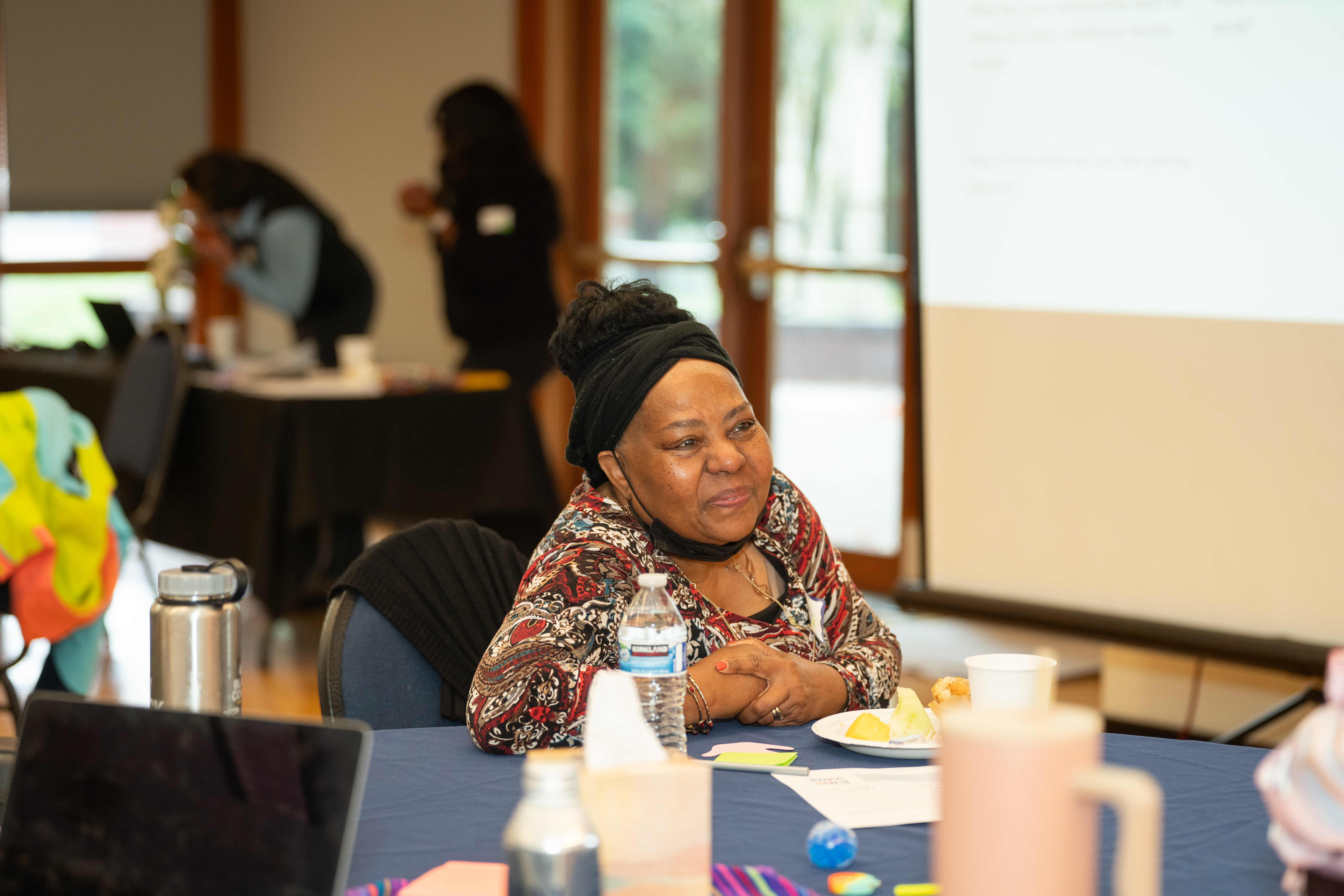
Thank you to Best Starts for Kids contracted providers for joining our Provider Support Series on September 1 and 3. Dr. Susan McLaughlin, Director of King County’s Department of Community and Human Services (DCHS), presented on contract requirements and available resources and support. A Q&A session followed the presentation.
If you were unable to join us or would like to review the information shared, please review the content below.
Video recording and presentation
Download the presentation slide deck
Provider Resources
- Best Starts for Kids Technical Assistance
- Best Starts for Kids Capacity Building
- DCHS contractor trainings and resources
- Best Starts for Kids Organizational Capacity Questionnaire for new funding opportunities
Flyers
- Best Starts for Kids Capacity Building
- Best Starts for Kids Capacity Building (Spanish)
- DCHS contractor trainings and resources
Frequently Asked Questions
These questions came up in our provider support series meetings about new contracting policies and contract management approaches. Some questions that were brought up in these sessions were not included. They need to be addressed between the organization and their program manager.
Subcontracting
Q: When submitting a request to subcontract, is there a dollar threshold or does it apply for any amount?
A: No, there is not a dollar threshold. You are required to request to subcontract and this applies to any subcontract, no matter the amount.
Timing
Q: [Are these contract requirements] effective immediately?
A: Yes. All contract requirements are in your contract. Your program and/or contract manager will make sure to support you in implementing these changes as they come up. You can access contracting resources on the DCHS webpage: DCHS contractor trainings and resources.
Q: How much time do you estimate it will take to adapt our current systems to this new reporting?
A: This will depend on your contract and what internal controls you already have in place. The size and complexity of the contract has an impact on how much and what type of reporting. If you need help, support is available. Your Best Starts program manager can help. Best Starts capacity builders are also available to build partners’ internal program and fiscal reporting systems. This assistance includes helping develop performance measures, learning to collect data, creating a finance tracking system, developing fiscal controls and reporting procedures, and more. Visit Best Starts’ Capacity Building page for information, and/or request capacity building support with this form.
Q: These new guidelines have very strict deadlines for providers. However it has been our experience that DCHS often takes a considerable time to respond to questions or evaluate paperwork. That can be the cause of significant compliance issues.
A: DCHS is actively adding fiscal, compliance, and program/contract manager staff to better support our providers.
Q: What is the timeline for DCHS turning around invoices?
A: Contract terms state that DCHS strives to make payment within 30 days of a completed and accurate invoice or billing package. Over the past two years we have processed invoices and made payments in an average of 15-20 days.
Capacity
Fiscal Sponsorship
Q: I am fiscally sponsored. My Fiscal Sponsor has their own contract approval process. Is it practical for both of us to go through the contract approval process?
A: King County must directly contract with the legal entity accepting the risk and responsibilities associated with a contract. We require the fiscal sponsor to be the organization that applies for funding, rather than the sponsored organization. Applicants should work closely with their fiscal sponsor to submit an application. When the organization is awarded, the sponsor and organization work together through the contract approval process.
Recognition
Q: The focus has been on the accounting capacity of the organization: matching receipts instead of making sure the cool stuff in the community is happening. Is the King County government recognizing the important work happening in community?
A: King County recognizes and is supportive of the critical work happening in community. At the same time, we are committed to being responsible stewards of public funds. DCHS program staff and contact managers will continue to partner closely with contracted providers to provide the necessary supports organizations need to remain in compliance of contracting standards. DCHS will also continue highlighting the incredible work happening in community through our Best Starts for Kids blog, social media pages, and more. If you would like us to highlight some of the cool things you’re doing, please reach out to your contract and/or program manager who can make sure the Best Starts communications team is aware and can consider sharing your work on our channels.
Real-Time Support
Q: Training is helpful, but what happens after training when we have a real, time-sensitive question?
A: Your program and/or contract manager remain your best contact. However, if you’re still struggling to get a response, please reach out to the DCHS provider support email: DCHSProviderSupport@kingcounty.gov
Q: If new requirements are added, which existing forms, duplicate reports, data requests, approval layers, or administrative requirements will DCHS eliminate?
A: There are no plans to remove new contract requirements that were passed by the King County Council or recommended by the King County Auditor’s Office. We recognize this shift has not been easy for providers. We encourage you to visit our webpage for trainings and resources to support you: DCHS contractor trainings and resources
Q: Has there been conversation about right-sizing reporting to the amount of money granted and size of the organization that is funded.
A: Some reporting requirements vary by contract level, while others are standard across grants. Most requirements haven’t changed; our process has. What once waited for a formal compliance site visit is now requested more frequently.
Contract Amendments
Q: What happens, if the contract amendment process for budget changes takes too long that it impacts the organizations’ ability to implement those changes or continue serving the projects purpose?
A: We understand there have been challenges with the speed of contract amendments. We are starting to measure the time it’s taking and implementing quality improvements. Amendments must be processed before a provider can start billing for an activity not included in the contract. Billing for an activity not included in the contract will result in an audit finding and likely repayment of disallowed costs.
Q: Are contract amendments ever allowed to take effect retroactively?
A: While payment for amended activities cannot take place until the amendment is complete, we understand that sometimes execution dates of amendments occur after the activity start date. Before you begin, talk with your contract and/or program manager to avoid doing unapproved work. They can then confirm which costs are reimbursable.
Resources and Support
Q: Some capacity builders may give recommendations that differ what fiscal monitors look at. Will there be a transition to support community-based organizations so the information being given is all the same?
A: Please reach out to Best Starts’ Technical Assistance & Capacity Building Manager, Jorji Knickrehm, at jknickrehm@kingcounty.gov, if you’ve had a situation in which the capacity builder you’re working with gave you advice that didn’t match with what your King County program manager said. We work to keep our capacity builders informed so they can give partners accurate, up-to-date information about King County’s fiscal reporting requirements.
Q: Can we get a written decision tree to help us navigate? Including: what requires a contract, scope, quote, purchase order, amendment, or only an invoice?
A: Your Best Starts for Kids contract and/or program manager can best answer this on a case-by-case basis.. We also have resources available on our webpage. If you need additional support, please reach out to DCHSProviderSupport@kingcounty.gov.
Data
Q: Will addresses, email addresses, government issues identification, immigration related information, demographic data, or other sensitive personal information be required for new reporting requirements?
A: We never have and never will collect information about client immigration or documentation status. We also do not require clients to provide information they don’t want to. We do not withhold services from a client who chooses not to share information unless that information is required to determine eligibility, such as for Medicaid.. We follow all applicable data privacy regulations and add additional levels of privacy protection in many areas. Read more about our privacy practices here.
Organizational Capacity Questionnaire
Q: For smaller organizations that are currently applying for a new Best Starts for Kids opportunity and completing the Organizational Capacity Questionnaire, how will capacity gaps be handled?
A: The new process does not have a one-size-fits-all approach to defining capacity requirements. We look at the complexity and size of the anticipated award to set the capacity level needed to manage that award.
Ultimately, the organization needs to meet the set threshold for the solicitation for us to make the award. We may determine an organization meets the threshold, while also determining the organization needs continued support to keep building their capacity, pairing the award with some capacity building, as well.
Q: Is technical assistance available during the application and organizational capacity review process, to help smaller organizations strengthen things like financial tracking, service documentation, policies, and internal controls before contracting?
A: Best Starts for Kids Technical Assistance (TA) is available at no-cost to any organization that seeks help when applying for funding. TA consultants can help applicants develop their program budget for their application and advise on how to strengthen financial tracking, internal controls, and policies.
Best Starts has created a free recorded training for community-based organizations on how to strengthen financial documentation and internal controls. Capacity building supports, including consultants to strengthen financial tracking, policies, and internal controls, are available to currently funded Best Starts partners. DCHS has created free, recorded fiscal stewardship trainings . These trainings provide guidance about the financial tracking and internal controls required to contract with DCHS.
Q: Will applicants receive feedback on their Organizational Capacity Questionnaire?
A: If organizations that were not selected for funding want further clarity or feedback, they can request a debrief meeting with the Solicitation Manager, as outlined in the declination letter.
Implementation of New Requirements and Policies
Q: Have you done a small provider implementation test before these were rolled out?
A: No, we did not do a test pilot. DCHS is following the recommendations from the King County Auditor’s Office and implementing new legislation passed by the King County Council to improve how we oversee public dollars. DCHS is required to regularly update the King County Council on our progress.
These listening sessions have been one way for us to get feedback from providers and will help us understand how we can improve processes as we implement new requirements.
Q: There have been several workgroups across the county including community leaders focused on equitable contracting. Were these workgroup findings considered in the development of DCHS’ new contracting requirements?
A: DCHS and Public Health – Seattle & King County both have relied on the reports, findings, and feedback drawn from workgroups on equitable contracting to make decisions about developing best practices within the directives we have been given by the King County Auditor’s Office and the King County Council. Considerations include the trainings, technical assistance, and capacity building we offer; and scaling requirements to fit the size and scope of the award.
Q: Will DCHS test its materials and process with people who have limited English proficiency, limited digital access, low literacy, disability access needs, unstable housing, or safety concerns about sharing information?
A: All three provider trainings and materials are now available in Spanish. Materials have been vetted to ensure they are accessible through the Adobe Acrobat Accessibility Checker and Microsoft Word Accessibility Checker and follow plain language best practices.
If you are in need of an accommodation, please reach out to DCHSProviderSupport@kingcounty.gov
Client Impact
Q: I am worried about impacts on outreach and how we collect information from people who are immigrants and may be undocumented.
A: We have never collected, and will not collect, information about immigration status. We have strict rules on when and how we can share information, along with guidance for providers. If you have more questions on this topic, please reach out to DCHSProviderSupport@kingcounty.gov.