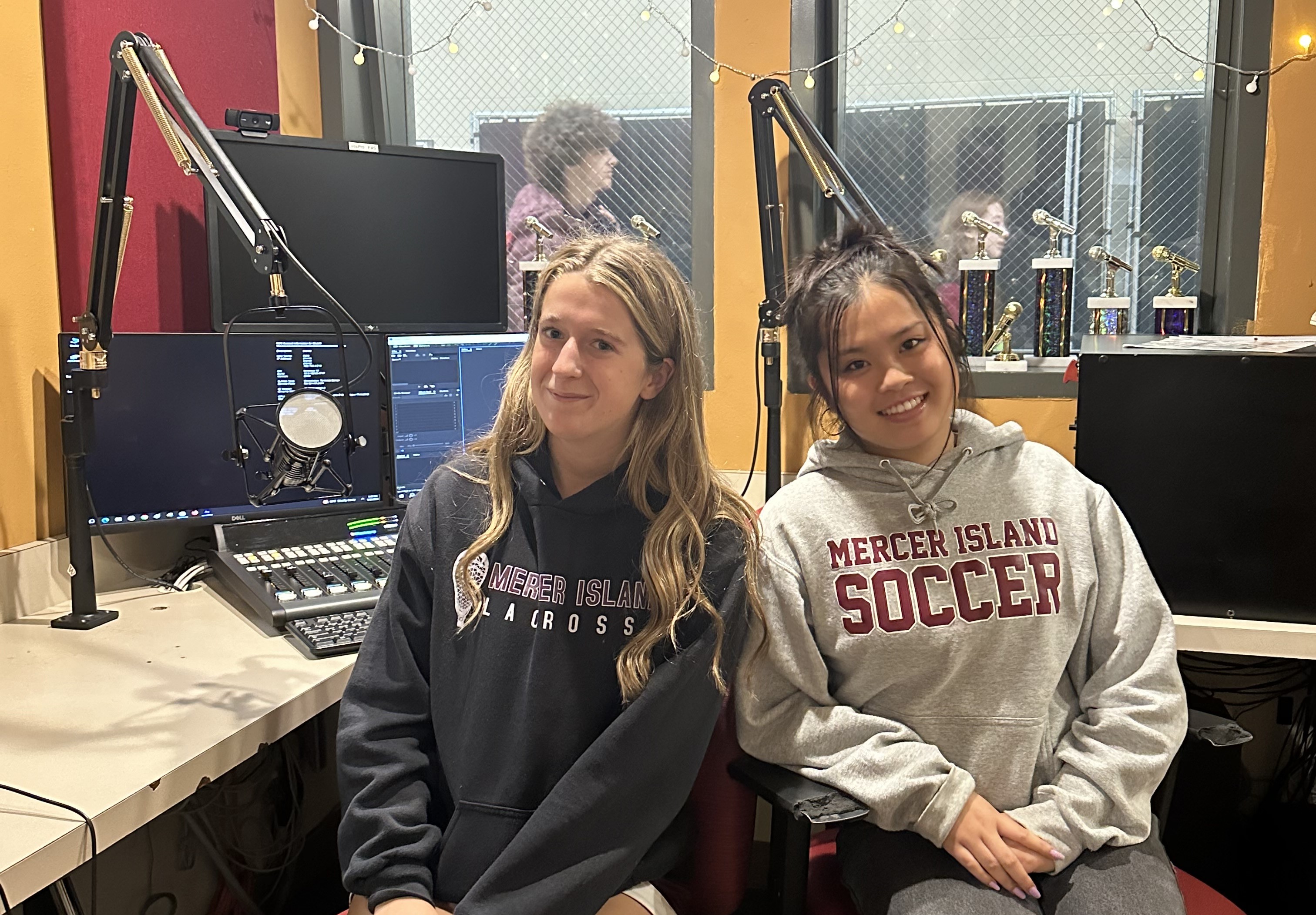
Hayley Nguyen and Anna Carson had been sitting at the same table in the same radio class in Mercer Island High School since their freshmen year in 2021 as the world rapidly changed around them.
Both had younger siblings, both had part-time jobs working with young children. So as pandemic recovery slowly began, and as many of the adults in their lives looked to see how isolation and the pandemic had impacted them as teenagers, Anna and Hayley were looking in another direction: to their younger siblings.
“We’re in high school and both see how it impacts high schoolers. And we both have younger siblings who are in middle school,” said Anna. “So we’ve seen that generation but the younger one, I think I was drawn to because (many adults we know) haven’t really thought about how they’ve been impacted.”
Hayley, who also has a job working with younger children, said it’s easier for younger children’s behavior changes to go unnoticed.
“I’m always around younger kids and I think on one level, it’s hard to tell because with kids you think, they’re just always rowdy, but in our project what we’re trying to do is go beneath that.” Hayley said. “Is this behavior intensified because of COVID or is this natural? That’s a big question we’re trying to answer.”
From an idea to a podcast
With support from their radio class teacher, this initial idea grew into a pitch for a podcast series: understanding the impact of COVID across different age groups, from children to teens, to the adults who work with young people. And with encouragement from their teacher they took this pitch and applied to the Youth Healing Project, a Best Starts for Kids funding opportunity that awards mini grants to young people who create mental health supports for their peers.
With the Youth Healing Project funding they are purchasing audio equipment to use in field interviews, allowing them more opportunities to capture interviews. Since the spring they have collected audio interviews with different age groups through their work in preschools, youth centers, and through their own high school connections.
“I love being able to broadcast stories that are very interesting but also aren’t often talked about, stories that aren’t often heard. Spoken voice compared to other forms of media, can be so powerful,” Hayley said. “Radio has really taught us the power of spoken voice. It’s really a valuable learning lesson, not just for promoting yourself, but also for speaking skills, communication and connecting with other people. I think that’s why we love radio.”
How their personal experience factors in
Though their initial focus was on younger kids, they are also interviewing people in their own age group.
“Like a lot of other kids like my age, I had a really hard time transitioning to high school and adjusting to the course rigor and homework rigor. That was, for me, one of the hardest things about COVID,” Hayley said. “I think there’s also the social aspect of being isolated from your peers. My grandpa stayed with me a lot of COVID, so I didn’t really get to see a lot of people. And I think that’s also a big reason why we want to do this project: to highlight the social aspect.”
Anna highlighted her own experience of being disconnected from her peers, as she temporarily relocated to Oregon during the pandemic.
“Being in a different state for six months, away from all your friends, is hard and then coming back, and everything being at once: now you get to go to school and sports and see everyone. I feel like a lot of people had similar experiences.”
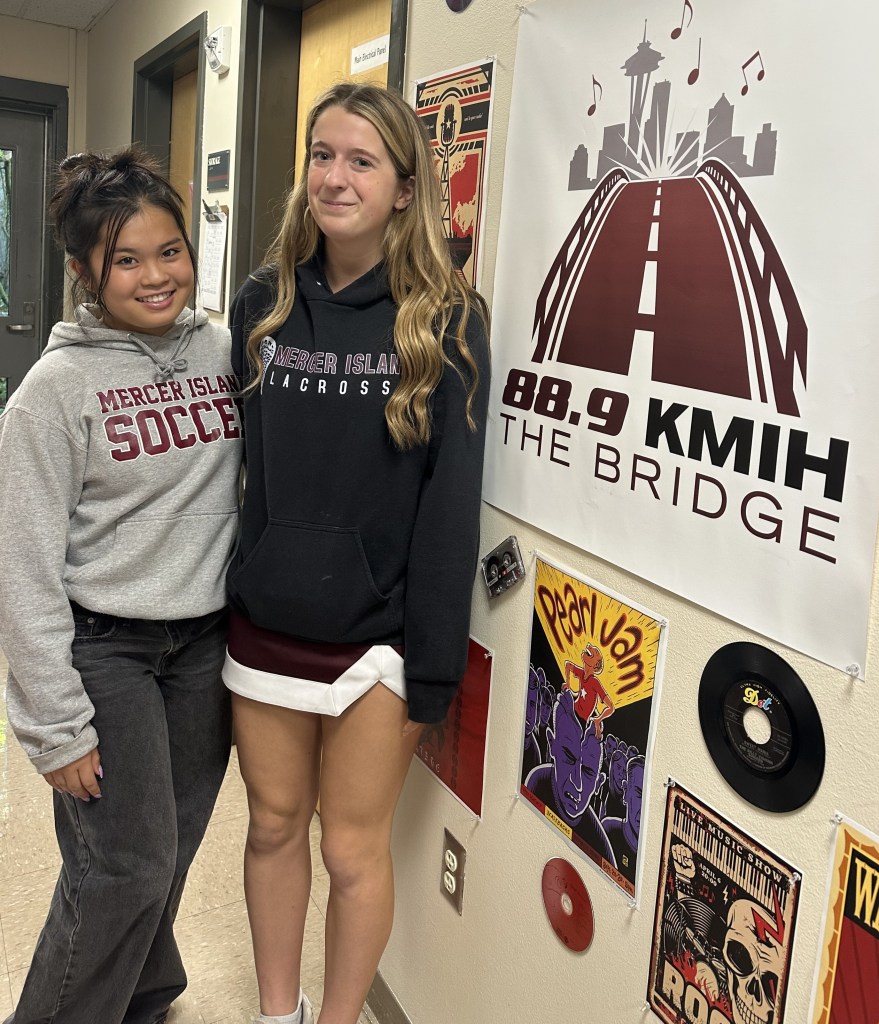
Hayley and Anna have begun producing the podcast episodes which they plan to release on their school’s radio station KMIH 889 The Bridge this fall.
Background
The Youth Healing Project was originally created by young leaders and community organizations in 2020 in response to the survey “In Their Own Words: Young People Describe the Impacts of COVID-19.” The project provides resources and support to young leaders advancing solutions that improve the mental health, connection, and wellbeing of young people in King County. Best Starts has been funding the Youth Healing Project since 2022. Partners include King County Reconnect to Opportunity, Public Health-Seattle and King County’s Cannabis, Tobacco, and Prevention Program, Best Starts for Kids, citiesRISE, the Community Center for Education Results, and the Public Health Overdose Prevention team.
If you or someone you know is struggling with depression or suicidal ideation you can call Crisis Connections or one of these lines for support:
- Children’s Crisis Outreach Services (CCORS), 206-461-3222. CCORS can come to you to provide free, 24-hour crisis intervention, including de-escalation, safety planning, and connection to longer-term support. Language interpretation is available
- Call a crisis line such as King County’s Crisis Line at 206-461-3222; the National Suicide Prevention Lifeline at 800-273-8255; the Trevor Project for LGBTQ youth at 1-866-488-7386; or text “HOME” to 741-741 for the Crisis Text Line.